
Hi, hello. I’m Gabby.
I’m a trauma-informed yoga teacher and writer based in Los Angeles with an M.A. in Yoga Studies and Yoga Therapy from Loyola Marymount University.
When teaching, I weave together presence, playfulness, and compassion to create spaces for transformation and genuine care. I invite students to experience yoga as a living, breathing practice and tradition that extends across space-time. Through breath-centered movement and mindfulness, I guide students back to their bodies, the Earth, and the quiet wisdom that lives within. My approach begins with the understanding that we are all already whole, with nothing to fix and no one to become. A heartfelt, sustained yoga practice clears the air so that we might remember our inherent wholeness.
Rooted in both study and lived experience, my research centers on grief care and somatic support, exploring how the body expresses and digests loss. Out of this work emerged Digesting Grief: Yoga Therapy & Bereavement, a yoga therapy framework that honors grief not as something to overcome, but as a sacred, embodied process to be met with tenderness and reverence.
You can find me guiding classical haṭha yoga and offering mindfulness teachings in unexpected places: from care homes, university meetings, and machine parts factories to playgrounds and dance floors. As a yoga therapist in training, I share evidence-based practices alongside ancient wisdom to nurture whole-person health while deepening the connection between body, mind, and heart.




01. 1:1 Yoga Therapy

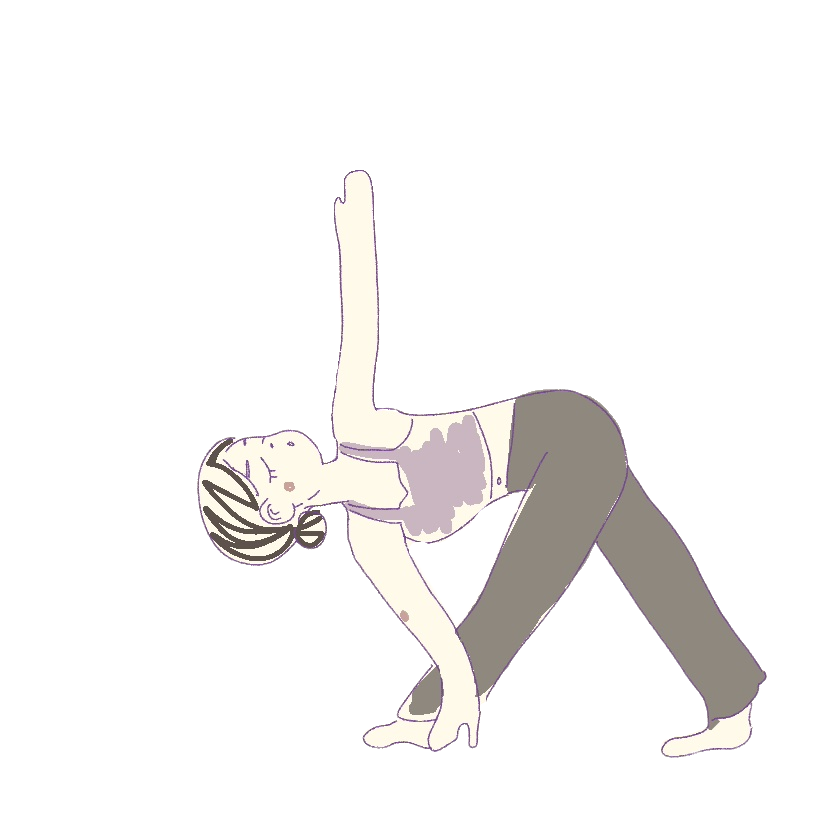
In your first yoga therapy session, you will be guided through a comprehensive intake assessment as we collaborate on setting a heartfelt intention/goal, sankalpa, for our work together.
Every yoga therapy client receives a personalized and evolving home practice plan with regular 1:1 guidance. These sessions include yogic education, lifestyle recommendations, āsana (physical postures), prāṇāyāma (energy regulation through the breath), and meditation. In person in Los Angeles, CA or Virtual.
$150/session. Limited local low income spots available by request.
02. Group Classes
Join my virtual weekly practice group “Sunday Sādhana” on Substack!
Looking for an instructor to provide a yoga class or mindfulness workshop at your event, business, or space?
I have experience teaching groups in corporate settings, healthcare facilities, as well as at elementary, middle, and high schools.
Reach out via email for details regarding rates and availability.
Follow @gabrielle.sigrist on Instagram for regular class schedule updates.

Frequently Asked Questions
-
Yoga therapy is the specific application of the tools of yoga to address an individual’s physical, mental, and emotional needs:
“A self-empowering process, where the care-seeker, with the help of the yoga therapist, implements a personalised and evolving yoga practice, that not only addresses the illness in a multi-dimensional manner, but also aims to alleviate [their] suffering in a progressive, non-invasive and complementary manner. Depending on the nature of the illness, Yoga therapy can not only be preventative or curative, but also serve as a means to manage the illness, or facilitate healing in the person at all levels.”
— TKV Desikachar
TKV Desikachar’s definition of yoga therapy describes the heart of the process. He played a major role in bringing yoga philosophy and the physical practices to the West. After studying in the lineage of his father, Thirumalai Krishnamacharya, he founded the first yoga therapy clinic in Chennai with a focus on making the practices accessible and relevant. Desikachar always taught each student individually, adapting the practice to their unique needs. This personalized approach later became known as viniyoga.
-
A yoga therapist has 5x the amount of education and training compared to a registered yoga teacher. I also have a master’s degree in Yoga Studies with a concentration in Yoga Therapy, amounting to over 2,000 hours of study into all aspects of yoga: physical, psychological, and philosophical.
A yoga therapist builds a therapeutic relationship with the client. A formal one-on-one intake and comprehensive assessment are conducted. This involves a review of the client’s history in order to address their specific concerns.
A yoga therapist develops a personalized therapeutic wellness plan based off the client’s unique story, condition, and stated goal in order to alleviate suffering and empower the individual towards self-healing.Getting started is simple. Reach out through our contact form or schedule a call—we’ll walk you through the next steps and answer any questions along the way.
-
In my opinion, the best way to begin a yoga practice for the first time is to work with a yoga therapist who can guide you with care as you dive in: tailoring the practices to your unique constitution while educating you on the deeper aspects of the tradition in a safe, supportive environment. A yoga therapist helps bridge the gap between physical mat practice and living yoga.
You don’t need to be able to do fancy poses (or any poses at all) to benefit from yoga therapy. One reason to do yoga is to become more flexible, as well as stronger and more balanced physically and mentally. The physical postures are a small part of a complete yoga practice, and modifications for them can help you build strength & flexibility. Yoga therapists certified by IAYT have specific training that enable us to modify poses and exercises safely for injuries, physical limitations, and other conditions. Simply tell me about your concerns, and continue to communicate with your medical professionals.
-
Yoga therapists do not diagnose mental & physical health conditions or problems.
The assessment tools used in yoga therapy emphasize wellness and overall health and are based in yoga philosophy rather than on the psychological sciences used by psychologists, social workers, and mental health counselors. Yoga therapy care is usually broader and utilizes the “tools” of āsana (poses + somatic movement), prāṇāyāma (energy regulation + breathing techniques), meditation, dialogue, and lifestyle change.
Although the techniques used by yoga therapists and physical therapists may look similar in their use of movement, the professions differ significantly in their underlying philosophies, scope of practice, and the “tools” in their toolbox. Physical therapy focuses on restoring function and may use techniques like exercise (which can include postures similar to yoga), manual therapies, electrical stimulation, ultrasound, and dry needling. Yoga therapy, on the other hand, uses its practices to foster nervous system regulation, resilience, and well-being.
(This is a simplified explanation! Also as with occupational therapy and integrative medicine, in general these aligned professions are wonderful complements to one another; many patients can benefit from having both a yoga therapist and a psychological therapist, physical therapist, acupuncturist, etc.)
-
Check out at this graphic showcasing the health conditions that benefit from yoga practice and have been verified by high quality health science research. Each condition listed has a corresponding reference to a peer-reviewed article published by a reputable research journal or book. Many thanks to Timothy McCall, MD for this resource!
Now the teachings of yoga begin...
अथ योगानुशासनम् / Aṭha Yogānuśāsanam
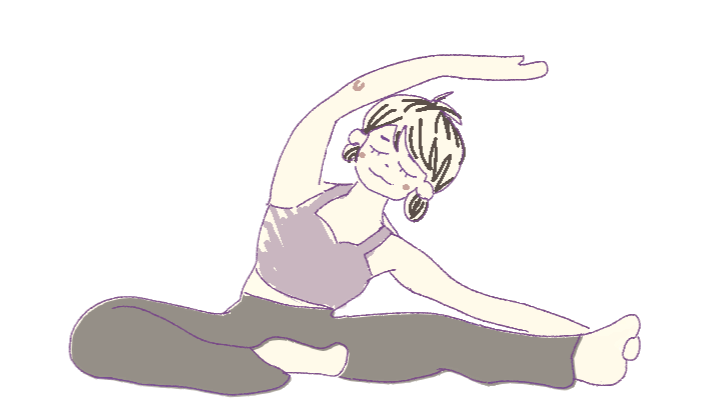
I am grateful to be a second generation yoga teacher, walking down the path my mother began before me. With years of mentorship, dedicated study into the dharmic traditions, and a lifelong personal practice of āsana, prāṇāyāma, & meditation supporting me, I invite you to explore the art of embodiment.
In my classes, I offer a nervous system based and trauma-informed approach that creates a welcoming landing pad for all bodies, identities, and abilities. I focus less on the appearance of the shapes and instead place attention on the subtle energetic exploration of your soma (body), the opening of your heart-cave, the nourishment of your breath, and the state of your mind. This is the yoga of being rather than doing.
There is more than enough yoga content out there. I’m endlessly curious about yoga’s context: cultural, historical, political, and social. The “why” behind all the “do.” Yoga originates in the Vedas, the ancient Indian scriptures. The root of the word yoga, yuj, means “to yoke” or “to unite.” The unity of body and mind cultivated through yoga gives rise to skillful action: radically nonviolent and compassionate behavior in the world. Patañjali’s Yoga Sūtra treats yoga as a form of psychology. It systematically outlines the mind; its patterns, pitfalls, and powers. The Patañjala aṣṭāṇga (eight limb) yoga path is a journey of Self-realization with ethics as the starting point. These principles guide the sādhaka, the dedicated practitioner, towards inner harmony and external integrity.
When we commit to living yoga philosophy, we begin to cultivate a present-focused awareness that is playfully curious about sensation while gently quieting the inner critic. An accomplished yogī moves through life in harmony, attuned to the rhythms and language of nature… of Mother Earth herself. May any merit arising from this practice be dedicated to the liberation of all beings, सर्वभूतानि (sarva-bhutāni), everywhere.

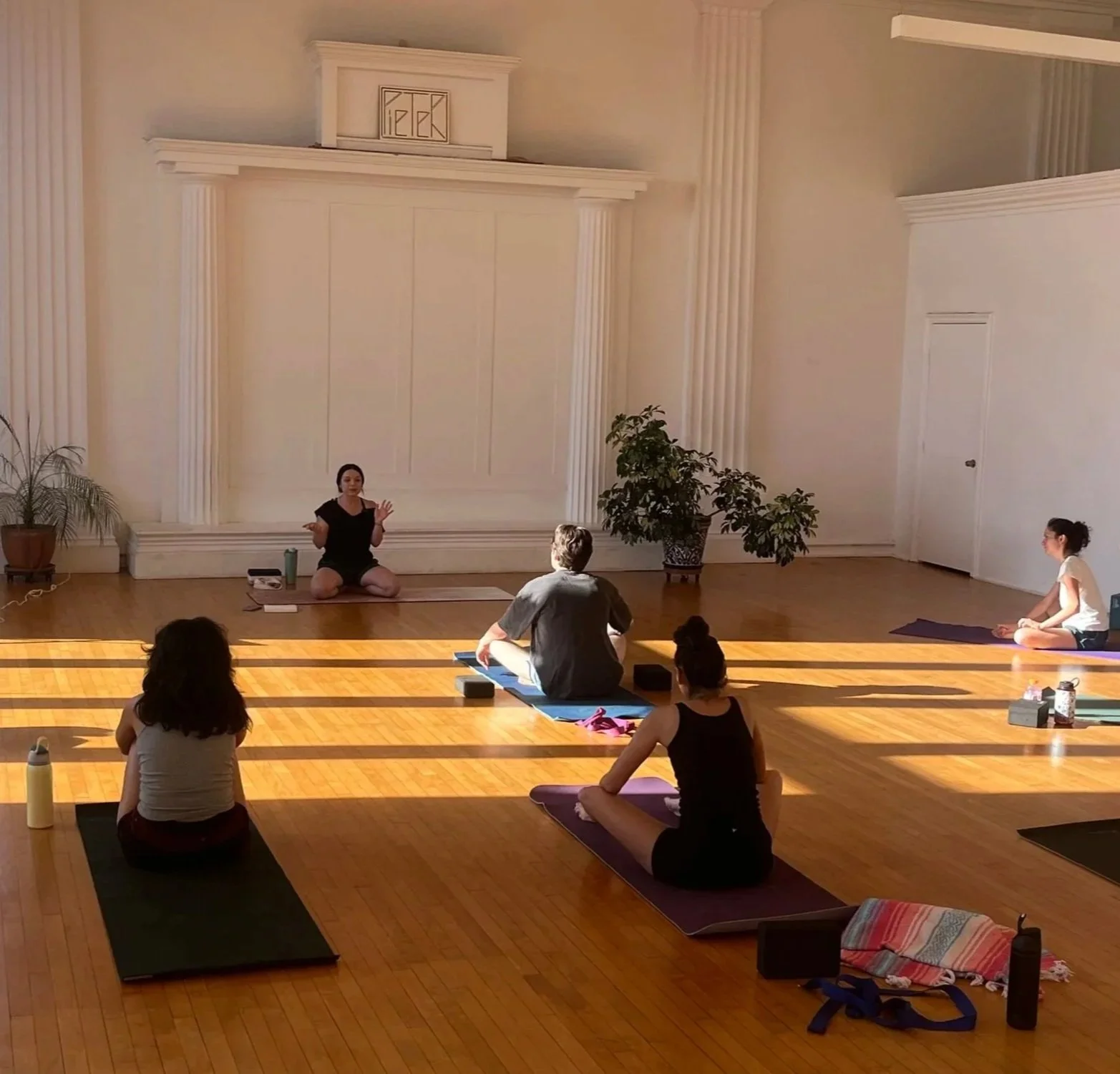


The coping skills Gabby teaches are yoga magic. I am continually amazed at how a short session totally flips my energy. A peaceful pause, a reflection, a glimmer of joy.
- A
Gabby is calm, collected, and clearly devoted to giving everyone a meaningful experience. I’m not even much of a ‘yoga person’ and I always love taking classes with her.
- E